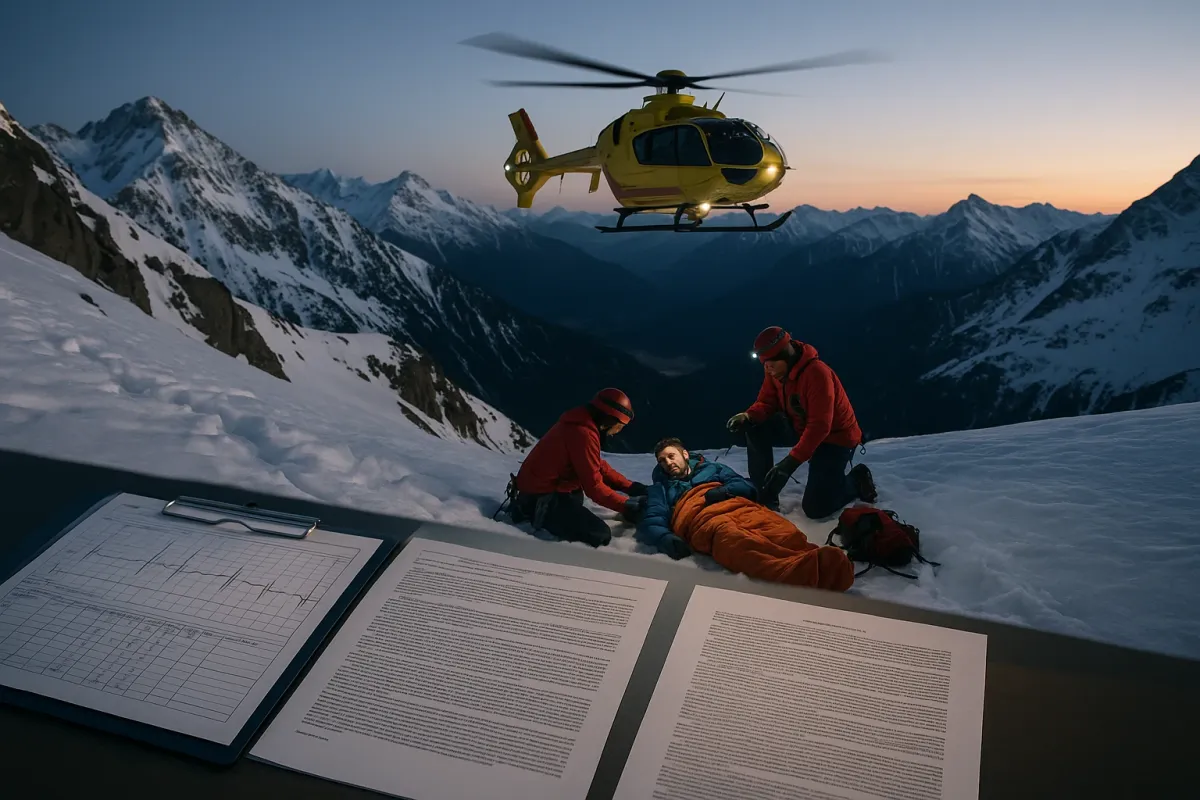
You don’t need to be climbing Austria’s highest peak for your life to flip from “epic weekend” to “full‑blown legal drama.” Right now, European headlines are locked on the chilling story of 33‑year‑old Kerstin Gurtner, who allegedly froze to death on Austria’s Grossglockner after her boyfriend left her behind. He’s now facing negligent homicide charges — and the world is asking: Where does a horrible accident end and legal responsibility begin?
If you’re dealing with medical issues, this case is more than a tragic headline. It’s a real‑time masterclass in duty of care, emergency response, and what happens when the people you rely on — partners, guides, or even doctors — allegedly don’t step up. Let’s break down the legal process vibes behind this story and turn it into practical power you can actually use.
1. Duty of Care Isn’t Just For Doctors — It Follows You Onto the Mountain
In the Grossglockner case, investigators are laser‑focused on one question: What duty did the boyfriend have once his partner was in danger? Prosecutors say he abandoned her; his defense will almost certainly argue he misjudged the risk or tried to get help. That tension — between “I did what I could” and “You should have done more” — is exactly what plays out in medical malpractice cases every single day.
When you’re a patient, your “mountain guide” is your healthcare team. They have a legal duty of care to act as a reasonable professional would in the same situation. If they walk away from a worsening condition, delay care, or ignore clear red flags? That’s the med‑mal equivalent of leaving someone on an ice‑covered cliff.
Share‑worthy takeaway:
If something feels dangerously wrong — at home, in an ER, or on a hiking trail — ask directly: “What is your duty to me right now?” Watch how people respond. In court, those moments of action or inaction matter more than the dramatic headlines.
2. “Accident” vs. “Negligence”: The Line Prosecutors Are Drawing Right Now
A lot of people looking at Kerstin Gurtner’s death are thinking: “But hiking is risky — isn’t this just a tragic accident?” That’s exactly what negligent homicide trials test. Prosecutors have to prove he didn’t just make a mistake — he made an unreasonable one. That’s the same core question in medical malpractice: did someone breach the standard of care, or was it an unavoidable bad outcome?
In hospitals, that might look like:
- Missing classic heart attack signs in a young woman because “she’s probably anxious”
- Discharging someone with obvious sepsis symptoms and no labs
- Ignoring a plummeting oxygen level during surgery
Just like the Austrian court will bring in mountain experts, weather data, and rescue timelines, med‑mal cases bring in medical experts, chart timestamps, and treatment guidelines. The story you tell yourself (“it was just bad luck”) may not match the story the law sees (“this was preventable”).
Share‑worthy takeaway:
If a doctor tells you, “These things just happen,” you’re allowed to think like a prosecutor and ask:
“Could another reasonable doctor have prevented this?”
That’s the negligence test in one sentence.
3. Timelines Can Make or Break a Case — On a Glacier and in a Hospital
In the Austrian tragedy, one of the biggest questions is timing:
- When did the weather shift?
- When did she collapse or stop moving?
- How long was she left alone?
- When was rescue actually called?
- How many hours passed between your first complaint and any real testing
- How long it took to call a specialist, surgeon, or ICU team
- How long your loved one sat in triage while getting worse right in front of everyone
- Photos of swelling, rashes, or injuries with visible timestamps
- Messages to family or friends saying, “They won’t take me seriously”
- Patient portal screenshots showing when you requested help
- Discharge papers vs. when symptoms exploded
Those details can change the entire legal outcome. Swap the glacier for a hospital, and the same thing happens. Malpractice cases often hinge on:
If you’re facing a possible med‑mal situation, your timeline is your lifeline. Courts love receipts:
Share‑worthy takeaway:
Start a health crisis log on your phone the second something feels off. Note what happened, who you told, and when. On the mountain, this is survival. In the hospital, it’s how you prove your case.
4. Rescue Systems vs. Reality: Why Calling for Help Isn’t Always Enough
Austria is famous for its polished mountain‑rescue system — helicopters, trained crews, coordinated response. Yet rescue still came too late for Kerstin Gurtner. That disconnect — between what the system promises and what actually happens — is painfully familiar to anyone who has waited 10 hours in an ER, been bounced between specialists, or watched 911 send an ambulance to the wrong address.
In legal cases, both criminal and civil, courts ask:
- Did the person in charge push hard enough for help?
- Did the system respond the way it was supposed to?
- Did delays make the difference between survival and death or disability?
In med‑mal, this is where “failure to transfer,” “failure to escalate,” or “failure to monitor” claims come in. It’s not just about the one doctor in the room — it’s also about systems that move too slowly while you’re the one paying in pain.
Share‑worthy takeaway:
When you’re in trouble, don’t just ask for help — ask:
“What’s the fastest way to escalate this? Who can make this urgent?”
Write down names and roles. If the system stalls and you’re harmed, those details become Exhibit A.
5. After the Shock: How Families Turn Tragedy into Legal Action
Right now, Kerstin Gurtner’s family isn’t just grieving. They’re forced into crash‑course lessons on criminal charges, autopsy reports, and potential civil claims — all while the press blasts their tragedy across Europe. That’s exactly what happens to families after medical disasters: first comes the shock, then the paperwork, then the overwhelming question of what to do next.
Here’s what families in high‑profile and everyday med‑mal cases often do — and what you can, too:
- Freeze all records: Request medical records ASAP, in writing. In many places, you have a legal right to them, even if the hospital seems “busy.”
- Screenshot everything: Condolence emails, text threads with staff, appointment reminders — it all helps build the story.
- Talk to a lawyer early, not perfectly: You don’t need your case sorted; you just need to say, “Something feels very wrong, can you look at this?”
- Protect your mental receipts: Write down your memories now, while they’re still raw. Courts care less about how you feel and more about what you can document.
Share‑worthy takeaway:
Justice moves slowly. Evidence does not wait. If something life‑altering just happened, your smartest first move is to save everything — then get quiet, get advice, and let professionals speak for you.
Conclusion
The Grossglockner case isn’t “just” a viral mountain disaster — it’s a live blueprint of how the legal system responds when someone in crisis is allegedly left behind. Swap the ice and altitude for an ER or a clinic, and you’re looking at the same core story patients face every day: Who had the duty? Who took the risk? Who paid the price?
You don’t need to be a lawyer (or a climber) to use these lessons.
You just need to remember:
- Duty of care follows you — from trails to treatment rooms.
- “Accident” and “negligence” are not the same thing.
- Timelines and documentation are your secret weapons.
- Systems can fail — and you’re allowed to challenge that failure.
- Families can turn heartbreak into accountability.
If this hit close to home because of something that happened to you or someone you love, you’re not overreacting — you’re waking up to your rights.
And on Med Mal Q, that’s exactly the kind of wake‑up call we’re here for.
Key Takeaway
The most important thing to remember from this article is that this information can change how you think about Legal Process.