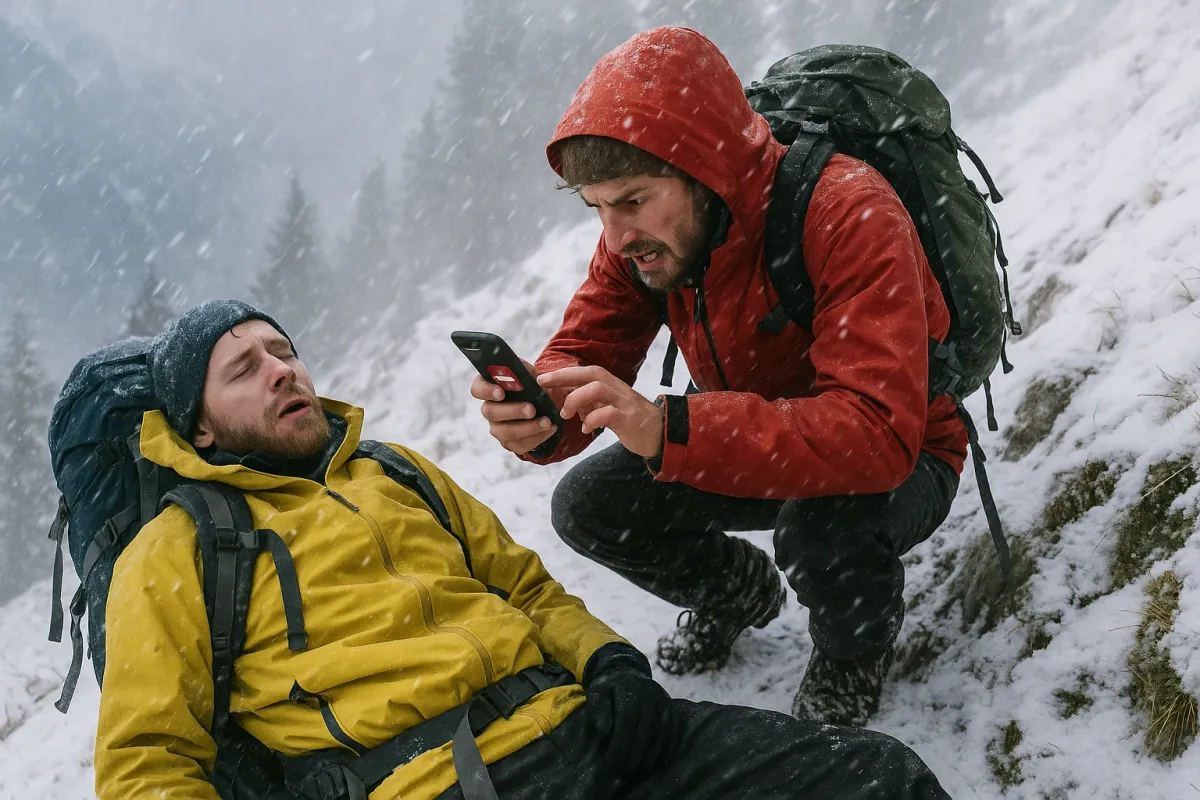
When officials finally identified 33‑year‑old Kerstin Gurtner—the woman who was abandoned by her boyfriend and left to fatally freeze on Austria’s highest peak—social media exploded. The story is heartbreaking, infuriating, and honestly, terrifying for anyone who’s ever trusted another person with their safety in extreme conditions. Her boyfriend is now facing negligent homicide charges, but here’s the twist most people are not talking about: this isn’t just a story about a bad boyfriend and a deadly mountain. It’s a red siren about how fragile your body is in cold, remote places—and how fast a rescue can turn into a recovery, or a recovery into a body identification.
If you’re traveling, hiking, skiing, or doing anything outdoorsy this winter, this case is your wake-up call. Hypothermia doesn’t care how “fit” you are, how much your partner “promises” they’ve got you, or how cute the Insta shot is going to be at the peak. The good news? There are smart, shareable ways to protect yourself medically before something becomes a headline.
Below are 5 prevention moves everyone should screenshot, share, and actually use—especially if mountains, winter trips, or any “adventure” are on your 2025 bingo card.
Know The “Golden Hour” Of Cold: Your Body Has A Deadline
In Kerstin Gurtner’s case, authorities say she was abandoned in brutal conditions on Austria’s highest mountain, and the temperature did the rest. That’s not just a relationship horror story—that’s a hard science problem. In severe cold, your body can go from “chilled and cranky” to unconscious and dying shockingly fast. The so‑called “golden hour” isn’t just for trauma surgeons; in icy environments, it’s how long you realistically have before your brain and heart are in serious danger.
Prevention starts with knowing your numbers. Once your core temperature drops below about 95°F (35°C), you’re in hypothermia territory, and it escalates quickly. Shivering hard? Slurred words? Clumsy hands? That’s not “I’m just cold,” that’s your nervous system malfunctioning. The biggest mistake people make is pushing through early warning signs to “just get to the top” or “finish the trail.” Don’t. Turn around sooner than you think. Treat shivering and confusion as medical emergencies in motion, not minor annoyances. The earlier you act, the less likely you are to end up depending on whether someone else chooses to leave you—or save you.
Never Outsource Your Survival: Make A “No Abandonment Pact” Before You Go
The detail that stunned people around the world: Kerstin’s boyfriend allegedly left her behind to go get help, and never made it back in time. Now he’s facing negligent homicide charges, and social media is asking: how is walking away from a struggling partner even an option? Here’s the prevention take: don’t wait for a crisis to find out what your travel buddy thinks is “reasonable.”
Before any high‑risk outing—mountain hike, off‑piste ski run, backcountry camp—have a brutally honest safety talk. Spell out what “we do not leave each other” actually means. Agree on specific rules: What happens if one person is slower? What if someone’s gear breaks? What if weather suddenly tanks? Also, decide who makes the final call to turn back (hint: the most cautious person wins, every time). Put it in writing in your phone notes if you have to. It sounds dramatic until you realize that in court, prosecutors and judges will look at what a “reasonable” person should have done. You’re allowed to set the bar way higher than “bare minimum reasonable.” That’s how you keep yourself alive—and avoid ever having your name appear in a charging document.
Screenshot Your Safety: Turn Your Phone Into A Mini Medical Lifeline
People love posting peak selfies, but Kerstin’s story is a reminder: your phone should do more than collect likes—it should be your emergency co‑pilot. If you’re heading into cold, remote, or high‑altitude environments, prep your tech like your life depends on it, because it might. Think of it as pre‑loading your “emergency brain” for when you’re too cold, scared, or disoriented to think clearly.
Before you go, download offline maps and pin key points: trailheads, huts, emergency shelters, hospitals, and lift stations. Add local emergency numbers (not just 911—Europe uses 112, mountain rescue units sometimes have direct lines). Save a simple medical note on your lock screen: allergies, conditions (like asthma, heart issues, Raynaud’s), and emergency contacts. Turn on location sharing with a trusted person who is not on the trip. Charge a battery pack and keep both devices in an inside pocket where your body heat can protect battery life from the cold. In a worst‑case scenario, even a partial signal + pre‑loaded map can help rescuers pinpoint you faster—and when your core temperature is dropping, minutes are everything.
Dress Like You Expect To Get Stuck, Not Like You Expect To Be Back By Lunch
The Austrian tragedy hit a nerve in the climbing and hiking community because so many people underestimate how quickly “quick hike” weather can flip. Prevention starts at your closet, not the trailhead. If your winter adventure outfit is built for photos instead of failure, your risk skyrockets. The mountain doesn’t care that you planned to be home by 2 p.m.—it only cares what you’re actually wearing when things go wrong.
Always dress for the night you didn’t plan to spend outside. That means layers: a moisture‑wicking base, insulating mid‑layer (fleece or wool), and a windproof, waterproof outer shell. Cotton is canceled; once it’s wet, it sucks heat from your body. Pack an extra dry base layer, gloves, hat, and socks in a sealed bag. Bring more water and snacks than you think you’ll need—your body burns massive energy trying to stay warm. And yes, that small emergency bivy sack or foil blanket you keep ignoring on gear lists? That’s the $20 item that can be the line between alive and hypothermic if your partner twists an ankle, the weather shifts, or you get lost. The goal isn’t to look hardcore; it’s to quietly be the person who can actually survive being out there longer than planned.
Tell Someone The Full Story: Your “Itinerary Receipt” Could Save Your Life
One of the most chilling parts of any survival timeline is the delay between when something goes wrong and when anyone realizes there’s a problem. In remote areas, that delay can be fatal. In cases like Kerstin’s, the focus is on what her boyfriend did or didn’t do—but zoom out and there’s a bigger prevention win: making sure that someone who’s not with you knows enough to sound the alarm early and accurately.
Before you disappear into nature (or even a snowstorm road trip), send a full “itinerary receipt” to a trusted person. Not just “going hiking, back by 5.” Include: exact route (with a screenshot map), who you’re with, what gear you have, car location/plate, planned check‑in time, and a very clear rule: “If you don’t hear from me by X time, call [specific number: local rescue, park rangers, hotel front desk].” Bonus level: share your live location for the whole day and confirm they can actually see it. This isn’t being dramatic; it’s giving search teams a starting point before hours or days pass. People love to talk about “adrenaline junkies” and “extreme sports,” but the real edgy flex in 2025 is radical, unapologetic safety planning.
Conclusion
The story of Kerstin Gurtner on Austria’s highest peak is already locked into the internet’s memory as a brutal relationship and legal drama—but underneath the outrage is a playbook for prevention that every traveler, skier, and mountain‑curious newbie needs to steal immediately. Hypothermia isn’t cinematic; it’s silent, fast, and unforgiving. Legal charges after the fact don’t bring a body back down the mountain.
Your job is to never give the system a chance to turn you into “the victim” in a headline. Make non‑negotiable pacts with your partners. Prep your tech like it’s life support. Dress for the worst‑case, not the best‑case. Broadcast your plan to someone who can actually send help. Then go have your adventure—with the confidence that you’ve stacked the odds hard in your favor.
Share this with the friend who always says “We’ll be fine” on every trip. If this case proved anything, it’s that “fine” is not a safety plan.
Key Takeaway
The most important thing to remember from this article is that this information can change how you think about Prevention Tips.