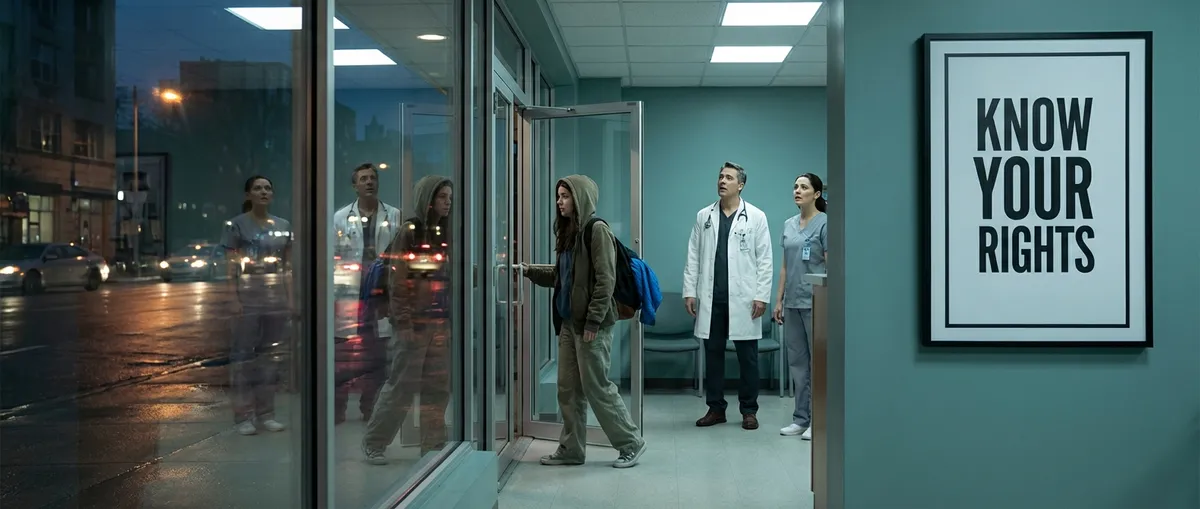
You’re allowed to say “nope” in a medical setting way more often than anyone tells you.
And spoiler: you don’t need a law degree, a lawyer on speed dial, or a dramatic ER scene to use your rights.
This is your scroll-stopping cheat sheet to five seriously shareable legal rights most patients don’t realize they already have—until something goes wrong. Save it, send it, and yes, screenshot the good parts for later.
Your “Explain It Like I’m 5” Right (a.k.a. Informed Consent)
Doctors don’t just treat you; they have to inform you. That’s not a favor—it’s the law in most places.
You have the right to know what’s being done to your body, why, and what your other options are. That includes: what the procedure is called, what can go wrong, what happens if you do nothing, and if there are safer or less invasive alternatives. If the explanation sounds like a pharma commercial in fast-forward, you can stop the convo and say, “Walk me through this in normal language.”
If you didn’t get a real explanation—or you were rushed, pressured, or misled—before a treatment that caused harm, that’s exactly the kind of situation that can turn into a medical malpractice claim.
Shareable script:
“Before I agree, I need you to explain benefits, risks, alternatives, and what happens if I do nothing—plain language only.”
The “I’m Not Signing That Yet” Power Move
Hospital clipboard Olympics are real—and you don’t have to play on hard mode.
You can read every form. You can ask for time. You can refuse to sign something you don’t understand. Consent is not legally valid if it’s forced, rushed, or based on missing info. That “just sign here real quick” moment? You’re allowed to pause it.
If anyone says, “You have to sign this or we can’t treat you,” you can calmly reply: “I want to understand what this means first. Can someone walk me through it line by line?” If they refuse to explain, that’s a red flag you should remember—and possibly talk to a lawyer about later if things go sideways.
Pro tip: Take photos of any forms you sign so you know exactly what you agreed to if things get messy later.
Your Second Opinion Is Not Betrayal—It’s Protection
You are not “difficult” for wanting another doctor’s brain on your case.
You can ask for a second opinion about a diagnosis, surgery, treatment plan, or medication change—especially if something feels off, rushed, or extreme. This is your right even inside big hospital systems or HMOs; your care team doesn’t get to gatekeep who you talk to about your own body.
Sometimes a second opinion reveals:
- A misdiagnosis (wrong condition)
- An overdiagnosis (unnecessary treatment)
- A missed safer alternative
If the first doctor’s plan leads to harm and it turns out another reasonable doctor would’ve done something different, that’s exactly the kind of fact pattern lawyers look at in med mal cases.
Low-drama way to say it:
“I appreciate your time. I’d like to get a second opinion before I decide. Please add your notes and test results to my record so I can share them.”
Receipts, Records, and the Right to Your Own Chart
Your medical records are basically your health receipts—and you’re legally allowed to see them.
Under federal law in the U.S. (HIPAA), you can:
- Request copies of your medical records
- Ask for electronic copies (patient portal, PDF, etc.)
- See lab results, imaging reports, visit notes, and discharge summaries
- Request corrections if something is wrong or incomplete
If your care went sideways—like a delayed diagnosis, a missed test follow-up, or a medication error—your records are the paper trail that shows who did what and when. Hospitals might drag their feet, but outright refusing or stalling too long can be a legal issue of its own.
Actionable move:
Request your records before there’s a problem. That way, if something ever feels off, you’re not starting from zero while you’re stressed and sick.
Sample email:
“Hi, I’m requesting a complete copy of my medical record for all visits from [date range], including provider notes, lab results, imaging, and discharge instructions.”
When “That Felt Wrong” Might Actually Be Negligence
Not every bad outcome is malpractice—but some are. The line is: did the provider act below the standard of care another reasonable professional would’ve used in that situation?
Some patterns that should make you pause and, at minimum, get legal advice:
- You went to the ER or clinic multiple times with the same serious symptoms and were brushed off, then later diagnosed with something major (like a stroke, heart attack, cancer, or infection).
- A test was ordered (scan, lab, biopsy), but no one followed up, and your condition got worse.
- A medication error happened—wrong drug, wrong dose, wrong route—and it caused real harm.
- You were never told about a serious risk that actually happened, and you would’ve refused the treatment if you’d known.
If your inner voice keeps replaying, “They should have caught that,” you don’t have to settle for vague answers and “sometimes these things happen.” You can talk to a medical malpractice attorney—most will review your situation for free and only get paid if you do.
Key point: Asking questions is not being ungrateful. It’s literally how the system is supposed to work.
Conclusion
You have more legal power in a hospital gown than you’ve ever been told—if you know how to use it.
You can slow things down. You can demand clear explanations. You can walk away, get another opinion, and pull your entire medical file like a boss. And if someone’s care crosses the line from “human mistake” to “legal negligence,” you’re not overreacting by talking to a lawyer—you’re protecting your future self.
Save this, send it to the group chat, and next time you step into a clinic or hospital, remember: you’re not just a patient in their system—you’re a person with rights.
Sources
- American Medical Association – Informed Consent – Explains physicians’ ethical duties around informed consent and patient understanding
- U.S. Department of Health & Human Services – Individuals’ Right under HIPAA to Access Health Information – Details your legal right to view and obtain copies of your medical records
- Mayo Clinic – Second Opinion: When and Why to Seek One – Discusses the value of second opinions and how to pursue them
- National Institutes of Health – Medical Malpractice Overview – Medical-legal reference on what constitutes malpractice and standard of care
- U.S. Courts – Understanding Federal Courts: Civil Cases – General background on how civil cases, including malpractice suits, move through the legal system
Key Takeaway
The most important thing to remember from this article is that this information can change how you think about Legal Rights.