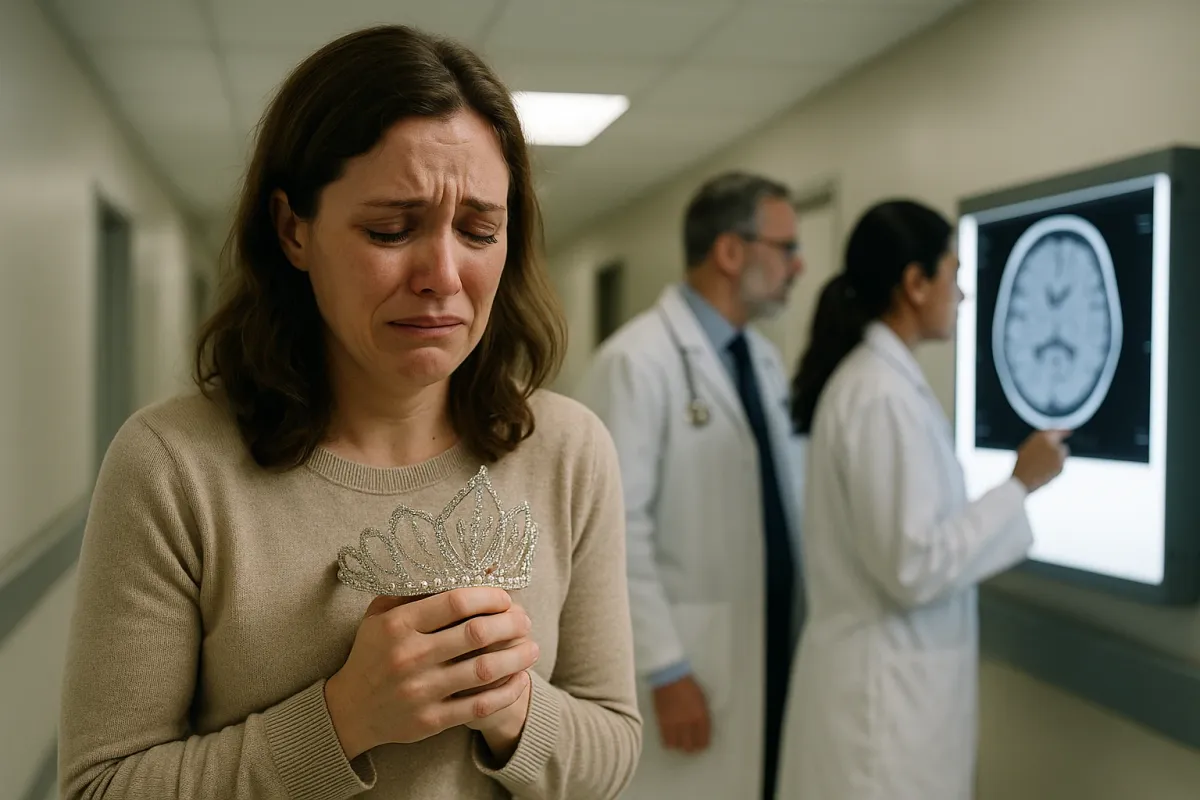
When a former beauty queen walks into court looking nothing like her pageant days and prosecutors say a toddler’s brain was “rendered useless,” it doesn’t just make headlines—it rips open some brutal questions about medicine, parenting, and who gets blamed when a child’s brain injury turns deadly.
Today’s viral case of the “heartless” beauty queen accused in a toddler’s death isn’t just true crime fodder—it’s a real‑time case study in how fragile pediatric care can be, how quickly doctors (and parents) can be judged, and how medical decisions get dissected in court years later.
Let’s break down what this kind of case really shows us—through a medical‑legal lens that anyone dealing with doctors, kids, or hospitals needs to see.
1. “Useless Brain” vs. Medical Reality: Why Words In Court Matter
In the current headline‑grabbing case, prosecutors are quoting doctors who said the toddler’s brain was “rendered useless.” That phrase is designed to shock a jury—but it also hides a messy medical story underneath.
In severe pediatric head trauma, scans can show massive swelling, bleeding, or widespread damage. But medicine is rarely as black‑and‑white as a courtroom soundbite. There are often questions: When did the damage start? Were there older injuries? Were there missed warning signs? Did anyone delay care? Courts love simple narratives—“monster caretaker, innocent child”—while real neurology is full of gray areas. For families, this matters, because once a phrase like “non‑survivable brain injury” hits the record, it can shut down uncomfortable questions about whether the system missed earlier chances to intervene. If you’re ever in a serious case, ask: What exactly did the scans show, and at what time? Don’t settle for a headline version of your medical truth.
2. Abuse Or Medical Mystery? How Toddlers’ Injuries Turn Into Legal War Zones
Cases like this beauty queen prosecution tap straight into a long‑running battle: is it always “abuse,” or could something medical be going on? In pediatric trauma, prosecutors often point to patterns—subdural hematomas, retinal hemorrhages, bruising—and argue they could only come from violent shaking or deliberate impact. But over the past few years, experts have pushed back, pointing to conditions like bleeding disorders, accidental falls, birth trauma, metabolic diseases, and even rare genetic syndromes that can mimic abuse.
This doesn’t excuse real abusers—but it does mean snap judgments can be deadly for justice. When a child arrives at the ER, the team may be under pressure to “call it” fast: accident, illness, or abuse? That label can change everything—from whether child protective services are called to whether a caregiver is cuffed in the waiting room. If your child ever has unexplained injuries, insist that doctors rule out all medical causes and document every test they do (or decide not to do). In cases like the beauty queen’s, those early decisions become the foundation of a future criminal or malpractice case.
3. Glamour On Trial: How Looks And Lifestyle Quietly Influence Medical Records
Let’s be honest: a “beauty queen” in the headline gets more clicks than “defendant.” That same bias can creep into exam rooms long before it reaches a jury. Attractive, well‑spoken, or social‑media‑polished caretakers can be treated very differently from exhausted, low‑income, or “rough‑around‑the-edges” parents when a child shows up harmed.
Research has shown that provider bias affects everything from pain treatment to how seriously concerns are taken. In suspected child abuse, that bias can lead to over‑suspicion of some families—and under‑suspicion of others—until something catastrophic happens. Then, everyone points backward asking, “How did no one see this coming?” In a high‑profile case, defense attorneys might argue their client was judged on past glamour, Instagram posts, or “pageant mom” stereotypes, while prosecutors will emphasize a cold, changed appearance as proof of a “dark side.” For patients and families, the takeaway is this: document, document, document. If you feel you’re being stereotyped or dismissed, ask for things to be put in the chart and keep your own timeline. Bias is hard to prove later if it lives only in vibes and memories.
4. When ICUs Become Evidence Lockers: Every Medical Decision Can End Up In Court
In this beauty queen case, ICUs, neurologists, and pediatric specialists are all suddenly part of a criminal narrative. What meds were given. When the CT was done. Who called whom. Whether brain death was discussed. In 2025, every beep of a monitor can become a data point for either the prosecution or the defense.
This is where medical malpractice and criminal law collide. If the child’s condition worsened and no one escalated care, that’s a potential civil case. If the team feels injuries were consistent with abuse and says so strongly, that supports a criminal charge—but if they were wrong, it can fuel a wrongful conviction or a med mal claim later. For any family in a serious pediatric emergency right now: assume the record is king. Ask who’s leading the case. Ask what the working diagnosis is—and what else they’re considering. Ask what they’d do if this were their own kid. Those aren’t “annoying” questions. They’re the questions that shape the narrative if your worst day ever someday becomes Exhibit A.
5. “Heartless” Headlines, Real Grief: How Families Can Protect Themselves In The Chaos
The current coverage calling the accused beauty queen “heartless” makes it easy to forget there’s a dead child, shattered families, and a medical paper trail behind the outrage. When a case goes viral, everyone becomes an armchair neurologist and forensic pathologist overnight. But your life is not a true crime podcast episode, and you don’t get a replay.
If you’re walking through your own medical horror story—especially with a child—three moves can quietly change everything:
- Bring a witness to major conversations with doctors. Have them take notes in real time.
- Request copies of key records early—imaging reports, consult notes, discharge summaries—so you’re not relying on memory or vibes.
- Talk to a med‑mal or criminal defense lawyer early if things feel off, especially when abuse is being discussed, even “informally.” Lawyers aren’t just for court—they’re for preventing your nightmare from taking legal shape without your input.
The beauty queen case is extreme, but the mechanics behind it—snap medical judgments, emotionally loaded language, and biased narratives—are playing out quietly in hospitals every day.
Conclusion
Behind the viral headline about a “heartless” beauty queen and a toddler with a “rendered useless” brain is a brutal case study in how medicine, bias, and the legal system crash into each other at full speed. Pediatric brain injuries are complicated. Families are messy. Doctors are human. Prosecutors are strategic. And once the story is locked in, it’s almost impossible to rewrite.
If you or someone you love is dealing with a serious medical crisis, especially involving a child, learn from what’s happening in this case right now. Demand clarity. Preserve records. Question assumptions. And never forget: the story that ends up in court starts with what gets written in the chart on Day One.
Key Takeaway
The most important thing to remember from this article is that this information can change how you think about Case Studies.