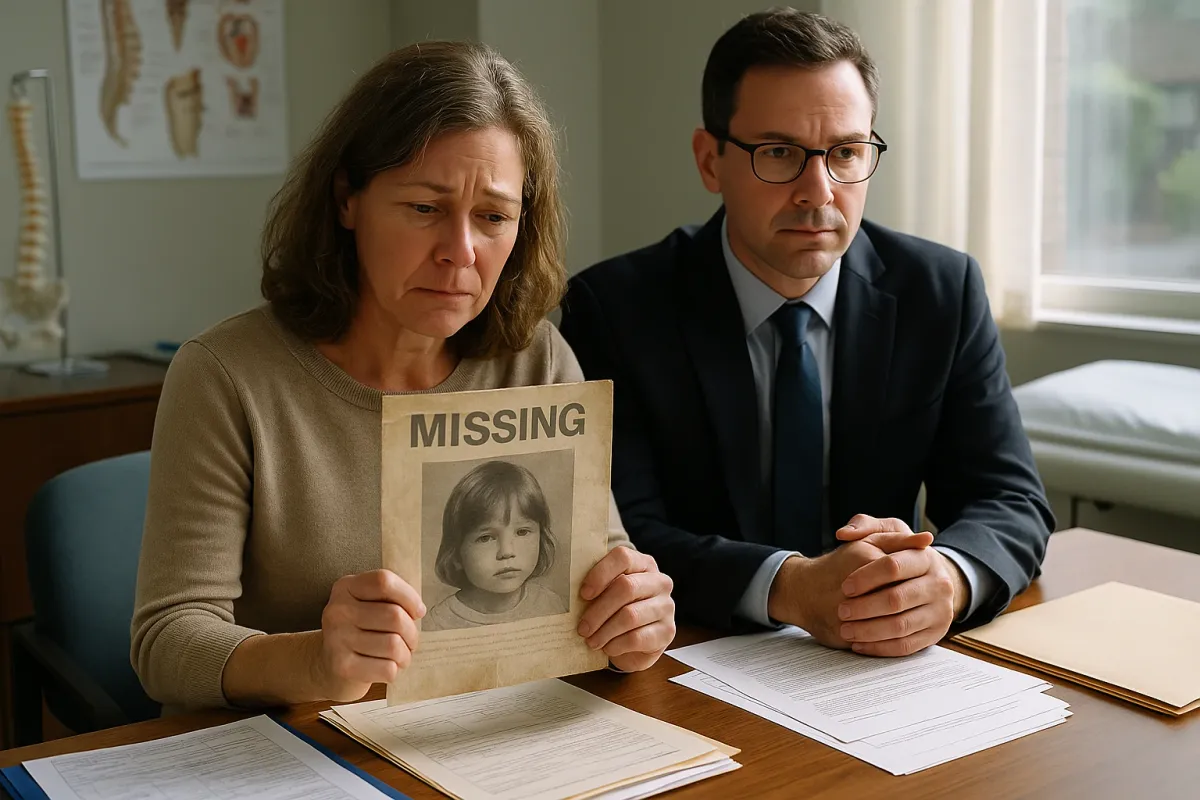
Imagine thinking your child was gone forever… and then getting a phone call 40+ years later saying, “We found her.”
That’s not a movie plot—that’s today’s news. A woman kidnapped from Kentucky in 1983 has been found alive more than four decades later, and her mom finally got to hug her again. The story is blowing up because it’s emotional, shocking, and honestly? It’s a massive reminder that your rights don’t expire just because time passes—especially when it comes to your medical and legal records.
On Med Mal Q, we live where real life, real law, and real health collide. So let’s break down what this jaw‑dropping reunion means for you if you’ve ever been misidentified, lost in the system, adopted without answers, or are fighting to access your own medical history.
Because behind every “miracle reunion” headline, there’s a paper trail, a DNA test, and a whole lot of legal rights most people don’t even know they have.
1. DNA Databases Just Turned Into One Of The Most Powerful “Legal Receipts” You’ll Ever Have
In case you missed it, more and more long‑cold cases—kidnappings, missing persons, even homicides—are being cracked open thanks to DNA databases like AncestryDNA, 23andMe, and law‑enforcement tools that match unidentified people to family members.
In a 40‑year‑old kidnapping case, this kind of tech is exactly what can help connect the dots when ID documents, birth certificates, and hospital records are long gone, wrong, or forged. For people who were abducted, illegally adopted, or misidentified at birth, DNA can override decades of bad paperwork and finally prove who they really are.
Here’s the legal twist: once DNA evidence suggests a match, it can trigger new legal actions—from updating birth certificates, to reopening investigations, to unlocking access to long‑buried medical records. You’re not just getting “closure”; you’re getting leverage.
If you were adopted, abandoned, trafficked, or just suspicious something’s “off” about your past, DNA isn’t just about ancestry—it’s a modern legal tool that can validate your identity and push institutions (hospitals, agencies, states) to hand over what they’ve been sitting on. And no, the fact that it’s been 30 or 40 years does not automatically erase your rights.
2. Your Medical History Is Legally Yours—Even If Your Childhood Was Chaos
Think about this: a child kidnapped in 1983 grows up with totally different parents, in a totally different environment, with zero access to her real family’s medical history. Heart disease? Genetic cancers? Autoimmune disorders? She never had the full picture.
Fast‑forward to today: once she’s identified, her medical rights go way beyond a feel‑good reunion. She may now have the right to:
- Update her doctors with accurate family medical history
- Get earlier screenings for genetic conditions she never knew ran in her real family
- Request or correct old hospital records tied to her original identity
- You can ask doctors, hospitals, and clinics for copies of your records.
- If the records are wrong (wrong name, wrong parent, wrong allergies), you can request corrections.
- If you discover you were misidentified, adopted without full disclosure, or even kidnapped, that shock wave can extend into your healthcare file—and you have a right to push for it to be fixed.
Legally, in the U.S., you have the right under HIPAA to access your own medical records—even if your childhood was a mess, you bounced through foster care, or your identity was changed. Many people don’t realize:
This isn’t just about “knowing your roots.” It’s about preventing misdiagnoses, catching diseases earlier, and making sure no one treats you based on fake or incomplete facts.
3. Time Doesn’t Always Kill Your Case: How “Old Trauma, New Evidence” Keeps Doors Open
A kidnapping in 1983 getting attention in 2025 is your proof: some wrongs outlive the calendar. And the same goes for medical wrongs.
In a lot of states, the statute of limitations (a.k.a. the legal deadline to sue) can be extended or “tolled” when:
- You were a minor when the harm happened
- You didn’t know a crime or malpractice had occurred
- You only discovered the harm years later (like finding out you were switched at birth, or your surgery records were falsified)
- Grew up in institutions, group homes, or sketchy family situations where your health was neglected
- Were given the wrong meds or no care at all as a child
- Are just now, as an adult, realizing how badly your health or mental health was mishandled
- Reopening an old medical negligence claim
- Filing a new lawsuit based on newly discovered harm
- Forcing an institution (hospital, agency, state) to finally answer questions they dodged for decades
That’s huge if you:
The Kentucky kidnapping case shows courts and investigators will reopen old stories when there’s new proof. If fresh DNA, a newly discovered record, or a whistleblower’s testimony lands in your lap, that may give you a shot at:
Bottom line: if you just found out something huge about your past medical care, don’t assume “it’s too late” until you’ve talked to a lawyer who actually understands delayed discovery and trauma‑based timelines.
4. “I Never Consented To That”: How Lost Kids Grow Into Adults With Fresh Legal Power
A kidnapped child can’t consent to anything: not a name change, not a move, not a shot, not surgery. That doesn’t magically “fix itself” when they turn 18. The adult they become can legally push back on what was done to them.
If you grew up in a nightmare—kidnapping, trafficking, forced placement, or just ultra‑controlling adults—you may be dealing with:
- Procedures you don’t remember “agreeing to”
- Birth control implanted without your say
- Psychiatric meds used as behavior control
- Medical trials you were never told about
- Adults who were victimized as children have fresh rights to challenge past “consent”
- Hospitals and providers who relied on forged, coerced, or illegal consent forms might face civil liability
- Records showing questionable child treatment are not just “history”—they’re evidence
Here’s the key: medical consent is a legal process, and when that process is corrupted by kidnapping, fraud, or coercion, there can be legal consequences years later. Courts are increasingly recognizing that:
So as we watch a 40‑year kidnapping case play out, remember: if your childhood medical story feels wrong, you’re allowed to ask, “Who signed for that?” and “Was that even legal?” That question can be the start of a very real legal case.
5. Viral Stories Can Do What Quiet Complaints Never Could
This Kentucky kidnapping story is going viral because it hits every emotional button: loss, hope, justice, reunion. But there’s a quiet legal power hiding inside the virality. When a story explodes, several things tend to happen:
- Old witnesses come out of the shadows (“I remember that nurse,” “I worked at that clinic.”)
- Lawyers step up because they see the public pressure and potential impact
- Other survivors realize, “Wait… that happened to me too” and finally speak up
- A trail of similar experiences that can support patterns of institutional abuse or neglect
- Public momentum that makes it harder for hospitals, agencies, or states to shrug and move on
- Space for class actions or coordinated legal strategy when people realize they’re not alone
If you’ve gone through something similar—lost in the system, adopted under shady circumstances, medically neglected, or misdiagnosed as a kid—sharing stories like this isn’t just “feel‑good content.” It creates:
So yes, absolutely share the reunion posts. But also: let them be your reminder that you’re allowed to question your own story—and if you find something ugly underneath, there are lawyers, advocates, and communities ready to help you turn that into action, not just trauma.
Conclusion
A little girl disappears from Kentucky in 1983. A woman is found over 40 years later. A mother gets her daughter back. It’s emotional, it’s wild, and it’s a living, breathing case study in how identity, law, and medicine are way more connected than most of us realize.
Here’s the real takeaway for you, right now:
- Your identity can be proven, even decades later.
- Your medical history is legally yours, no matter how messy your past.
- Your right to justice doesn’t always expire just because time did.
- Your consent matters, even retroactively, when it was stolen from you as a child.
- And your story is stronger when it’s shared, not buried.
If today’s reunion headline stirred something in your gut—questions about your records, your past care, or how you were treated as a kid—that feeling is your signal. Screenshot this, share it, send it to the group chat. And if you’re ready to move from “this feels wrong” to “what are my legal options?”, that’s exactly the kind of journey Med Mal Q exists to help you navigate.
Key Takeaway
The most important thing to remember from this article is that this information can change how you think about Legal Rights.